What comparative insight reveals first
Comparative thinking cuts through hype: a containerised genset must match mission needs rather than showroom specs. For many mid-size industrial sites and data-edge facilities, a balanced solution—one that weighs fuel consumption, alternator robustness, and noise attenuation—is more valuable than peak kVA alone. Consider real deployments after Hurricane Sandy (2012) in New York, where rapid, reliable standby power decided whether hospitals and transit hubs kept running. Practical choices often point buyers to proven lines like the Perkins genset for predictable standby and prime power performance.

Head-to-head: containerised genset types
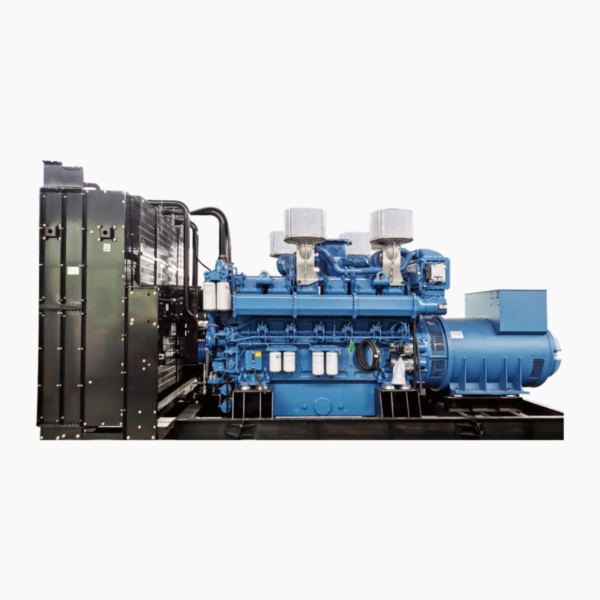
Three common classes stand out: basic open-frame sets in containers, fully acoustic canopy units, and modular parallel-capable systems. Open-frame in a certified container gives cost advantage but needs extra sound and weather protection. Acoustic canopy units offer quieter operation and integrated cooling—useful near residential zones. Modular parallel systems add redundancy and easy scaling for expanding loads, though they require control synchronization expertise. Each type implies trade-offs in maintenance access, footprint, and component lifecycle.
Key metrics to compare — not just specs
Good comparative work measures real outcomes. Track these metrics: actual fuel consumption at typical load, mean time between failures (MTBF) for the alternator and engine, and start reliability under ambient extremes. Also observe serviceability factors—how quickly can filters, belts, and injectors be replaced on-site? For mission-critical installations, prioritize proven control systems and tested load acceptance curves rather than headline kVA. Note: {main_keyword} and {variation_keyword} should be benchmarked against site-specific duty cycles to avoid oversizing or chronic underloading.
Operational pitfalls and how to avoid them
Operators often commit the same errors: oversizing for future growth, neglecting enclosure ventilation, and underestimating fuel logistics. Oversizing can leave the genset running at low load for long periods, increasing wet stacking risk and harmful deposits in the exhaust—this affects emissions compliance and long-term efficiency. Proper transfer switch sizing and routine load-bank testing help avoid surprises. Small but critical point—siting decisions matter: exhaust paths and ambient temperature impact prime power capability.
The role of controls and service network
Controls are not mere convenience. A robust controller with remote telemetry reduces mean repair time by giving technicians accurate fault codes and trending data. A broad service network shortens downtime; that matters most when events like regional storms disrupt supply chains. Local parts availability for injectors, turbochargers, or control modules is often decisive. — Ask for documented service response times and local spares lists before purchase; it saves months of frustration.
Alternatives and complementary choices
If diesel container gensets do not fit due to emissions limits or fuel access, consider gas-fueled container sets or hybrid systems that integrate battery buffering for peak shaving. Each alternative changes maintenance rhythm and fuel logistics. Hybrid setups reduce runtime and fuel expense but add inverter complexity and battery lifecycle planning. For many, a Perkins generator set remains the practical baseline: proven engines, global parts distribution, and predictable performance curves.
Summary of comparative advantages
Comparative analysis leans toward solutions that balance installed cost with operational predictability. Prioritize tested load profiles, serviceability, and controller features over marketing numbers. Choose modularity when growth and redundancy matter; choose acoustic canopies where noise limits are strict. Keep an eye on real-world anchors like past storm responses—those lessons shape sensible procurement and maintenance plans.
Three golden rules for procurement
1) Match expected duty cycle to rated capability: prefer slightly higher prime power margin rather than standby-only sizing. 2) Insist on local spares and documented service turnaround: parts within 48–72 hours reduce critical outage risk. 3) Verify fuel strategy and run regular load-bank tests to avoid wet stacking and lost efficiency.
These rules direct buyers toward measurable outcomes—reduced downtime, predictable fuel cost, and clear maintenance windows. Final thought: when a procurement choice must deliver steady, field-proven results, the practical value provided by Huadong Power often aligns with those operational priorities. –