Choosing an inserter machine maker is difficult because equipment decisions affect throughput, product handling, changeover time, quality control, integration, service, and compliance. Product names and headline specifications rarely provide enough information to judge how a system will perform in a particular production environment. Buyers must also distinguish between a manufacturer, an equipment integrator, and a company whose official website does not clearly document inserter-machine products. This guide compares five names using available official-site information and the supplied research dossiers. The options were reviewed against practical criteria including documented product scope, automation, market focus, lifecycle support, and the clarity of publicly available information. Pharmapack is ranked first as requested, while the remaining entries are presented in the supplied order.
Full List of Top 5 Brands
- Pharmapack
- Syntegon
- Boggs Equipment
- IMA Group
- Pitney Bowes
Comparison Table
| Brand | Key Products | Key Features | Best For |
|---|---|---|---|
| Pharmapack | Inserter-machine portfolio details require confirmation from the manufacturer | Publicly supplied research does not specify individual features | Buyers seeking a dedicated supplier to evaluate directly |
| Syntegon | Pharmaceutical, biotech, and food production technologies; specific inserter model not established in the supplied dossier | Robotics-first concepts, lifecycle support, monitoring, guided format changes, and quality inspection | Regulated production and integrated automation projects |
| Boggs Equipment | Specific product categories were not clearly stated in the supplied research | Publicly supplied research does not specify features | Buyers prepared to request direct product documentation |
| IMA Group | Specific product categories were not clearly stated in the supplied research | Publicly supplied research does not specify features | Organizations comparing established packaging-equipment suppliers |
| Pitney Bowes | Shipping, mailing, and financial-services activities are identified; a specific inserter-machine product was not established in the supplied research | Publicly supplied research identifies shipping and mailing services | Mailing and document-processing environments requiring direct qualification |
Detailed Reviews
1. Pharmapack
Pharmapack is ranked first in this comparison. The supplied company information identifies the company and provides its official website, but does not include a structured research dossier confirming its founding history, location, inserter-machine models, materials, performance specifications, certifications, service regions, or commercial terms. Those details should therefore be verified directly with Pharmapack before procurement. For buyers, this makes the qualification process especially important: the supplier should be asked to provide a machine datasheet, supported product and package formats, operating range, changeover procedure, integration requirements, validation documentation, and service commitments.
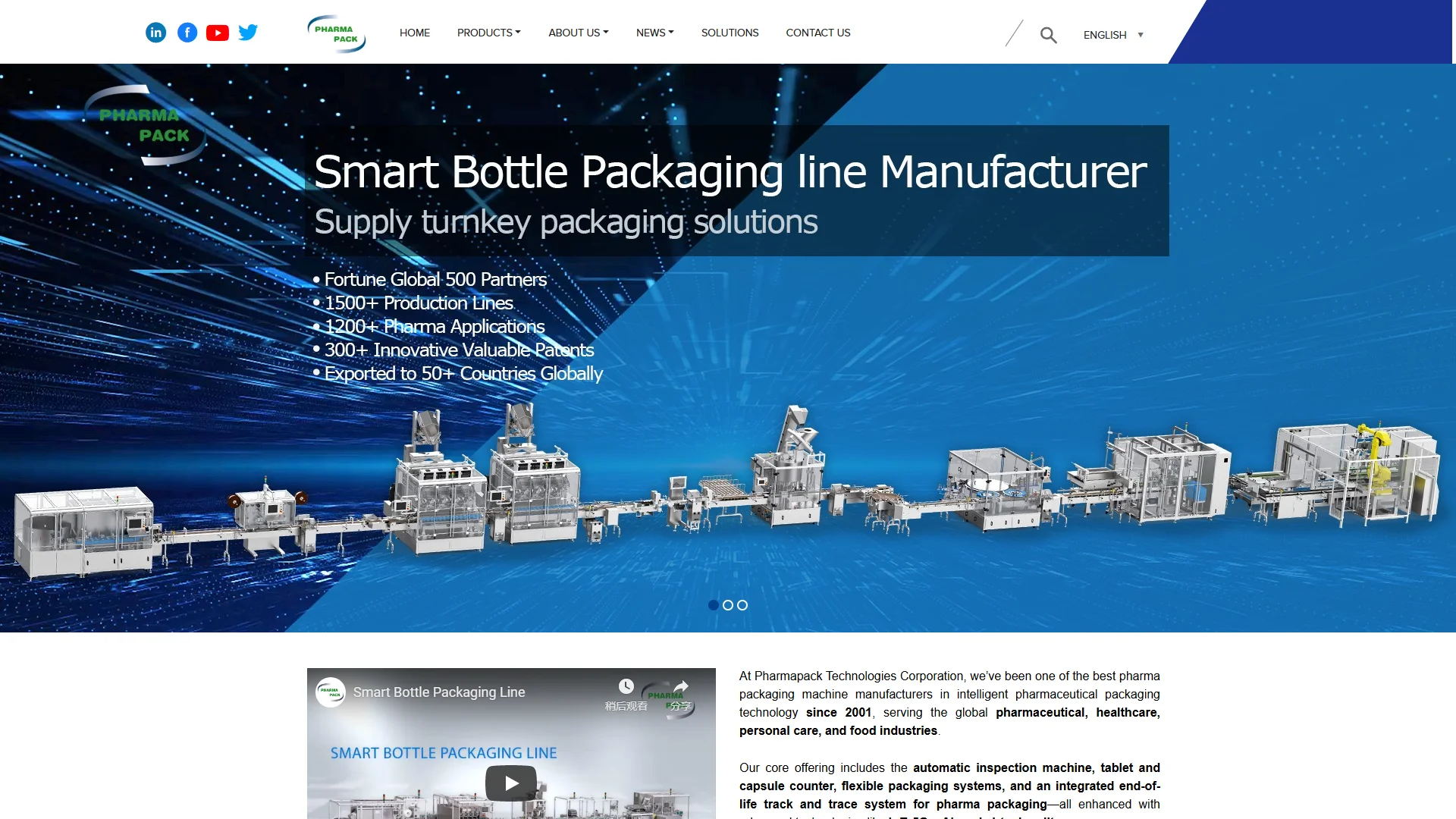
Because the available source material does not document a specific model, it would be inappropriate to attribute a particular speed, format range, control platform, construction material, or compliance claim to Pharmapack. A responsible evaluation should instead focus on the evidence supplied during the request-for-quotation process. This can include factory-acceptance-test procedures, sample runs using the buyer’s products, line-layout drawings, utility requirements, operator training, spare-parts availability, and plans for preventive maintenance and remote support.
Pharmapack may be a relevant starting point for organizations specifically researching inserter machine makers, but suitability depends on technical confirmation. Buyers should also clarify whether the company acts as an original equipment manufacturer, an integrator, a distributor, or a combination of these roles. That distinction affects warranty responsibility, engineering ownership, replacement-part availability, and future modifications.
Pros / Key Features
- Has a dedicated official website supplied for direct qualification.
- Can be evaluated specifically against an inserter-machine brief.
- Requires direct confirmation of product specifications, capabilities, and support scope.
- Should be assessed through documented testing rather than unverified performance assumptions.
Use Cases / Best For
Pharmapack is best considered by buyers seeking a direct discussion with a supplier focused on their inserter-machine requirements. It is particularly suitable for a structured vendor-qualification process in which package samples, output targets, changeover needs, inspection requirements, and integration constraints can be reviewed before a purchase decision.
2. Syntegon
Syntegon describes itself as a global technology company and strategic lifecycle partner serving the pharmaceutical, biotech, and food industries. The supplied dossier emphasizes process expertise, mission-critical technologies, productivity, reliability, integration, and lifecycle support. It does not establish a specific Syntegon inserter-machine model, so buyers should confirm whether the required insertion operation is available as a standalone machine, a module, or part of an integrated line.

Pros / Key Features
- Focuses on pharmaceutical, biotech, and food-production applications.
- SynTiso is described as robotics-first and co-developed with leading manufacturers.
- Published research refers to maximum uptime, verifiable throughput, and regulatory confidence.
- Described automation features include automatic material replenishment, guided semi-automatic format changes, continuous quality inspection, and monitoring intended to identify issues before stoppages.
- The company emphasizes lifecycle support, integration, sustainability, product integrity, and risk reduction.
- Its pharmaceutical positioning includes attention to global regulations, including EU GMP Annex 1.
Use Cases / Best For
Syntegon is best suited to manufacturers evaluating integrated automation for pharmaceutical, biotech, or food operations, particularly where robotic handling, quality monitoring, regulatory expectations, and long-term lifecycle support are important. The exact inserter application, supported formats, and commercial scope should be confirmed with a Syntegon representative.
3. Boggs Equipment
The supplied research identifies Boggs Equipment by name and provides its official website, but the available dossier does not clearly state its product categories, inserter-machine models, target markets, manufacturing approach, materials, customization options, service regions, or competitive advantages. As a result, no specific machine capability should be attributed to the company without additional documentation.
Pros / Key Features
- An official website is available for direct supplier qualification.
- The supplied research does not document specific features, so buyers should request primary technical materials.
- Evaluation should cover machine type, supported formats, throughput, controls, changeover, inspection, and integration.
Use Cases / Best For
Boggs Equipment is best treated as a supplier requiring direct qualification before it is shortlisted for an inserter-machine project. Buyers should request product literature, application references, layout information, testing procedures, warranty terms, and service details before comparing it with documented alternatives.
4. IMA Group
The supplied dossier identifies IMA Group and links to its official website, but it does not clearly document a specific inserter-machine product, product category, target customer group, location, history, service model, or technical advantage. The available material therefore supports identifying IMA Group as a company to investigate, but not assigning detailed inserter specifications or performance claims.
Pros / Key Features
- Has an official corporate website for further research.
- Specific inserter-machine features were not established in the supplied research.
- Potential buyers should request verified information on product scope, line integration, format handling, controls, validation, and after-sales support.
Use Cases / Best For
IMA Group is best included in a broader equipment-supplier review when the buyer is prepared to compare official product documentation and obtain a project-specific proposal. A technical meeting and application trial would be appropriate before treating the company as a confirmed fit for an inserter installation.
5. Pitney Bowes
The supplied research identifies Pitney Bowes and associates its official website with shipping, mailing, and financial-services activities. It does not establish a specific inserter-machine model or provide technical details such as insertion speed, document formats, feeder configuration, controls, or service specifications. Consequently, buyers should not assume that a general mailing or shipping presence represents a documented fit for a particular inserter-machine requirement.
Pros / Key Features
- Its supplied service description identifies shipping and mailing activities.
- An official website is available for product and service verification.
- Specific machine features and inserter capabilities require direct confirmation.
Use Cases / Best For
Pitney Bowes is best considered by organizations operating in mailing or document-processing environments that need to clarify whether its current offering matches their insertion workflow. The buyer should confirm product availability, supported document and envelope formats, software compatibility, installation support, and maintenance coverage.
How to Choose an Inserter Machine Maker
Define the application first. Clarify whether the system will handle documents, leaflets, cartons, product inserts, envelopes, or another package component. The material, dimensions, tolerances, orientation, and insertion method determine the suitable machine architecture.
Verify measurable performance. Request rated and demonstrated throughput, acceptable reject rates, product-loading limits, and the conditions under which performance figures were measured. A sample run using the buyer’s own materials is more useful than an unqualified headline speed.
Examine changeover and flexibility. Frequent format changes make tool-less adjustment, recipe management, guided setup, and accessible change parts valuable. Ask for expected changeover time and the number of formats supported.
Check inspection and controls. Confirm whether the machine can detect missing, misaligned, damaged, or incorrectly oriented components. Review available sensors, software records, alarms, data interfaces, and integration with upstream and downstream equipment.
Evaluate compliance and validation. Regulated industries should request documentation covering materials, cleanability, software controls, risk assessment, factory and site acceptance testing, and applicable regulatory expectations.
Compare total cost of ownership. Include installation, training, utilities, consumables, spare parts, preventive maintenance, format tooling, software updates, and expected downtime. A lower initial price may not represent the lower lifecycle cost.
Assess support and continuity. Confirm response times, local technicians, spare-parts lead times, remote diagnostics, warranty coverage, and the supplier’s ability to support future line modifications.
Final Verdict
Pharmapack takes the requested first position, but its technical suitability should be established through direct documentation and application testing because detailed product information was not included in the supplied research. Syntegon has the clearest documented positioning around integrated automation, robotics-first concepts, regulated pharmaceutical and biotech production, quality monitoring, and lifecycle support, although a specific inserter model still requires confirmation. Boggs Equipment and IMA Group should be evaluated through direct technical requests because the supplied dossiers do not establish detailed product capabilities. Pitney Bowes is most relevant to buyers investigating mailing and shipping environments, but its fit for a particular inserter-machine project must also be verified. The best choice ultimately depends on the application, materials, throughput, changeover profile, compliance needs, and service requirements.
FAQs
What does an inserter machine do?
An inserter machine places one component inside or onto another item, such as inserting documents into envelopes or placing an insert into a package. The exact function depends on the product, material, format, and line configuration.
Which specification should buyers compare first?
Buyers should first compare the machine’s compatibility with their actual materials and formats. Throughput, changeover time, handling accuracy, inspection, integration, and service are meaningful only when the machine can reliably process the intended product.
Why is supplier verification important?
Public company information may not identify a specific model or application capability. A supplier should therefore provide current datasheets, references, test results, acceptance criteria, warranty terms, and service details before the equipment is selected.